
Rozmowa: Krzysztof Korwin-Piotrowski z Eweliną Mytych
Zdjęcia: Józef Ćwiek i archiwum Fundacji Arte Viva
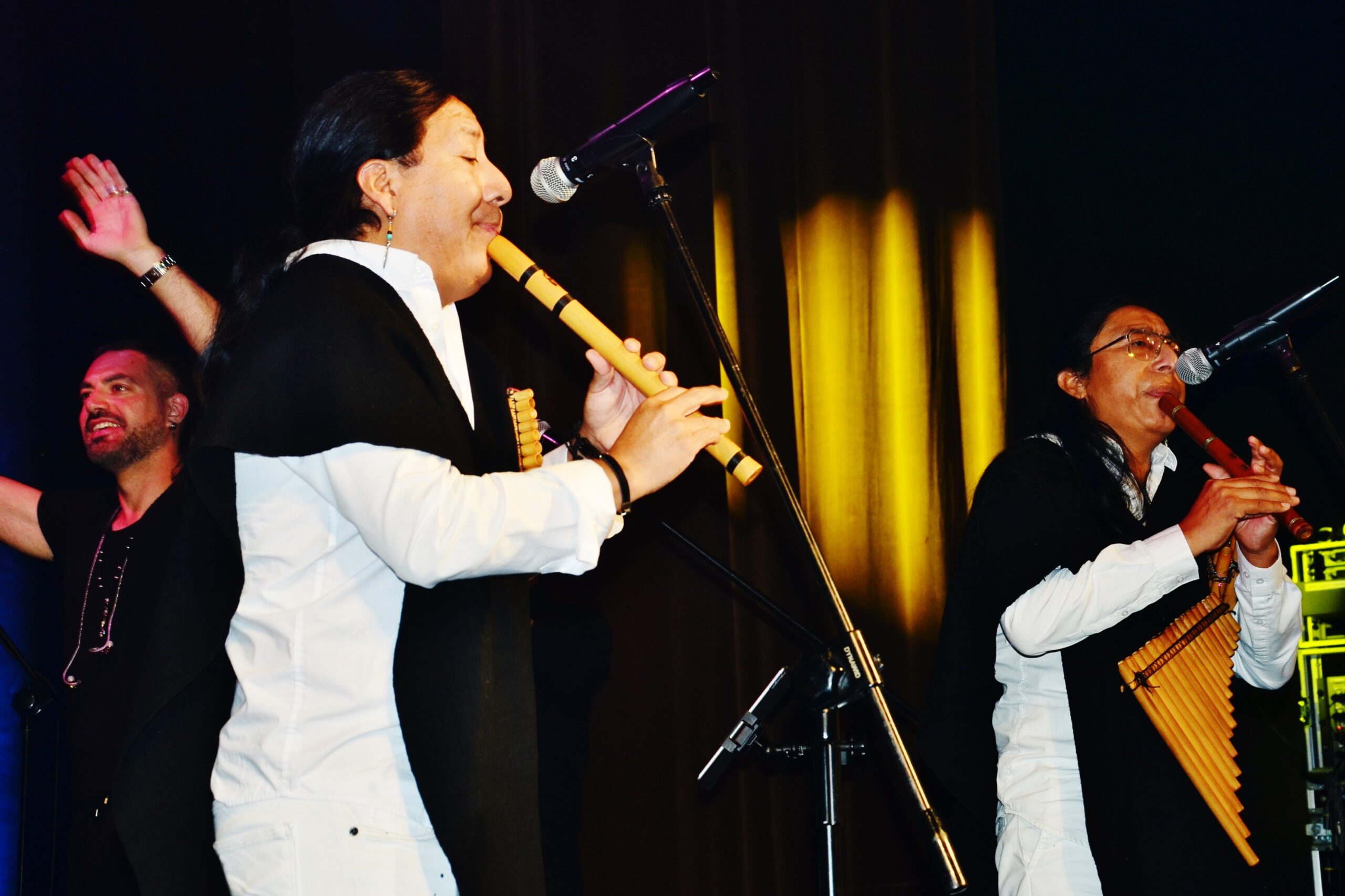
Zespół z Ewadoru Ruana Salasaka działa dopiero od 4 lat, a ma już 540 tysięcy obserwujących na TikToku, prawie 45 tysięcy na Facebooku oraz 111 tysięcy subskrybentów na YouTube. Ich utworów można też słuchać na Spotify. Muzycy to Eliseo Jerez Masaquiza oraz Anibal Jerez Masaquiza. Mimo identycznych nazwisk nie są braćmi, lecz przyjaciółmi z tej samej miejscowości Salasaka w Ekwadorze. Artyści wystąpią 24 stycznia 2026 roku o 18.00 w Kinie Na Starówce w Żorach podczas koncertu „Karnawał w Rio”. Towarzyszyć im będą na scenie także: Felix Lala Quartet oraz Arte Viva ShowGirls. Organizatorami wydarzenia są: Fundacja Arte Viva, dyrektor artystyczny Krzysztof Korwin-Piotrowski i Ewelina Mytych. Współpraca: Miejski Ośrodek Kultury w Żorach, Scena Na Starówce.
Krzysztof Korwin-Piotrowski: Kiedy Pani poznała zespół Ruana Salasaka?
Ewelina Mytych: To był początek roku 2023. Ja już wtedy uczyłam się języka hiszpańskiego od około pół roku. Równocześnie zaczęłam wchodzić w świat Indian. Zapisałam się na różne fora muzyczne, zaczęłam subskrybować artystów, którzy reprezentowali ten typ muzyki. W pewnym momencie zauważyłam, że na moim koncie na TikToku, które już przekształcałam na hiszpańskojęzyczne, zaobserwował mnie zespół muzyków z Ekwadoru – Ruana Salasaka. W samym momencie artyści zaczęli mnie obserwować też na Facebooku. Oni pierwsi chcieli dodać mnie do znajomych. Ja również ich zasubskrybowałam. Zaczęłam z ciekawości przeglądać sobie, jacy to są muzycy i jaki typ muzyki reprezentują. No i wtedy zapoznałam się z tymi chłopakami.
Zaczęłam z nimi rozmawiać. Eliseo i Anibal opowiedzieli mi swoją historię, że pochodzą z prowincji Tungurahua w Ekwadorze, która znajduje się w pobliżu słynnego wulkanu Tungurahua w Andach, niedaleko Salasaki, czyli miejscowości, z której obaj pochodzą. Eliseo urodził się pierwszego czerwca, dokładnie w Dzień Dziecka w 1982 roku. Natomiast Anibal jest od niego dwa lata starszy i urodził się ósmego października 1980 roku.
Chłopcy dorastali w Salasace. Wcześniej znali się z widzenia. Nie chodzili razem do jednej klasy, ale uczyli się w tych samych szkołach. Po prostu, wie pan, była to znajomość tylko na „cześć”. Chłopcy uczyli się muzyki ze słuchu, ćwiczyli sobie na pierwszych instrumentach w swoich domach. Ale niestety sytuacja ekonomiczna w Salasace w latach osiemdziesiątych i dziewięćdziesiątych była taka, że panowała tam dość duża bieda i rodziców nie było stać na to, żeby mogli uczyć się tej muzyki na uniwersytetach lub w szkołach muzycznych.
Natomiast oni mieli takie samozaparcie i dyscyplinę, że po prostu sami bardzo intensywnie się uczyli, sami ćwiczyli. Za każde zarobione pieniądze kupowali sobie kolejne instrumenty, coraz to nowsze. No i wie pan, przyszedł taki moment, że pod koniec lat dziewięćdziesiątych obaj wyemigrowali do Europy, najpierw Anibal, a kilka lat później Eliseo. Pracowali w różnych krajach. Przewijali się przez Niemcy, Belgię, aż w końcu trafili do Francji.
A proszę mi powiedzieć, jak to jest z nazwiskami rdzennych Amerykanów? Bo oni obaj nazywają się tak samo, a nie są rodziną.
Ja też na początku myślałam, że to są bracia i w ogóle chyba większość osób, które mają okazję ich poznać, myśli na początku, że to bracia, a oni nie są w ogóle spokrewnieni. Po prostu jest taka tradycja w kulturze latynoamerykańskiej, w Ekwadorze, w Peru, w Boliwii i w innych krajach, że tam nazwiska otrzymuje się po ojcu i po matce. Kobiety, wychodząc za mąż, swoich nazwisk nie zmieniają i dzieci mają nazwisko łączone po tacie i po mamie. Najpierw jest nazwisko ojca, potem matki. No ale w tym regionie jest tak, że zdecydowana większość osób ma to samo nazwisko albo w odwrotnej kolejności, czyli: Jerez Masaquiza albo Masaquiza Jerez, albo Jerez Jerez, albo Masaquiza Masaquiza. No i właśnie dlatego, że większość osób tak się nazywa, oni również mają te same nazwiska czyli Jerez Masaquiza.
I we Francji mają rodziny, i tam mieszkają na stałe?
Tak, we Francji pozakładali swoje rodziny. Ich żony przyjęły po nich te podwójne nazwiska, dzieci również. Więc te ekwadorsko-francuskie rodziny nazywają się tak samo. Mieszkają w ślicznej miejscowości Ernée w regionie, który nazywa się Mayenne. Oprócz muzyki zajmują się wytwarzaniem i sprzedażą rękodzieła indiańskiego. No bo tak naprawdę, wie pan, chyba wszyscy Indianie, którzy są uzdolnieni artystycznie, mają też polot do prac plastycznych, do wytwarzania biżuterii albo do malarstwa. Anibal i Eliseo akurat nie malują obrazów, ale potrafią wytwarzać piękną biżuterię artystyczną: kolczyki, bransoletki, wisiorki.
A łapacze snów też sami robią?
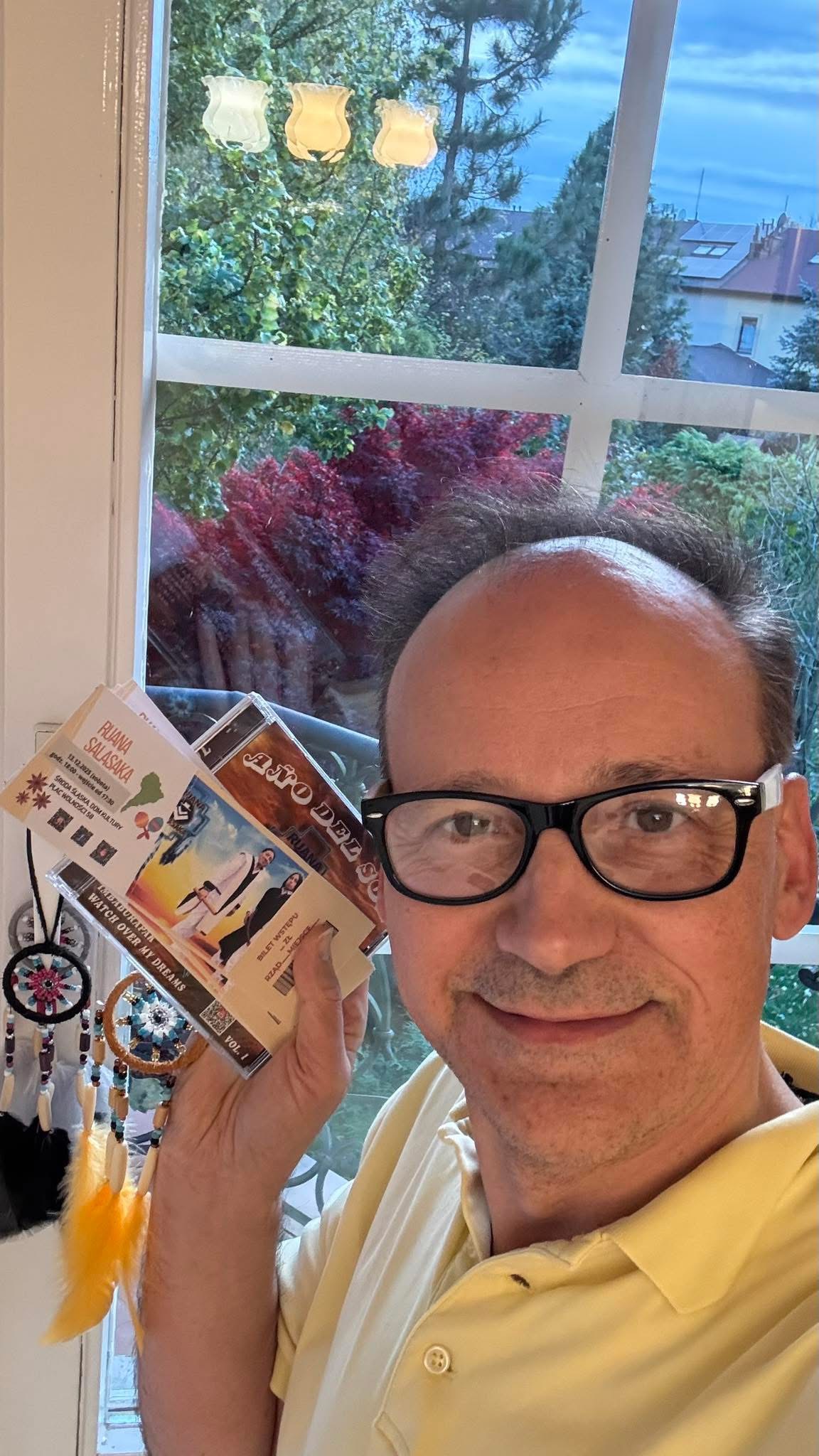
Tak, łapacze snów, czyli dekoracje do domu, są różnego rodzaju, od najmniejszych po największe, które możemy sobie powiesić na ścianach. No i te łapacze snów mają takie symboliczne znaczenie. Ja uważam, że mają wpływ na nasze sny, bo one nas po prostu uspokajają.
Tak, ja mogę powiedzieć z własnej perspektywy, że odkąd dostałem od nich, za Pani pośrednictwem, łapacze snów, mam trzy w jednej sypialni i od tego momentu zacząłem zapamiętywać swoje sny, a wcześniej w ogóle jakby ginęły w czeluści niebytu. Jak tylko się budziłem, otwierałem oczy, to już w ogóle nie wiedziałem, co mi się śniło. Teraz te sny są bardzo dla mnie realistyczne, ale równocześnie dobre. Na przykład przywołują mi ludzi, z którymi miałem kiedyś dobre relacje, potem były gorsze i te relacje poprawiają się w snach. I to jest właśnie niesamowite. Od momentu, kiedy powiesiłem na oknie i na ścianie te łapacze, to faktycznie nie mam żadnych koszmarnych snów. Bardzo często miałem takie sny wcześniej, czasem bardzo dramatyczne i straszne, z jakimiś czeluściami, przepaściami, zlatywaniem. A teraz mam sny w atmosferze domowej, z przyjaciółmi, z rodziną. Więc z mojej perspektywy to działa.
No to ja muszę panu powiedzieć o innej sytuacji. Ja mam kolczyki i wisiorek z łapaczami snów, więc proszę sobie wyobrazić, że z tym zasypiam. No i wie pan co? Miałam snów, które posiadały dobre znaczenie. Ma pan sto procent racji. Ktoś może mówić, że to są tylko wierzenia, ale ja jednak myślę, że jest w tym prawda.
Najważniejsze jest nastawienie człowieka, prawda? Mamy świadomość i podświadomość. To, że nasza podświadomość jakby ukierunkowuje się na coś pozytywnego, to jest bardzo miłe, bo nie dość, że lepiej się śpi, to człowiek budzi się z lepszym, bardziej optymistycznym nastawieniem do życia. A kolejna sprawa to muzyka andyjska, która koi nerwy. Dzięki Pani poznałem ostatnio panią Małgorzatę Neumann z Malborka, która ma kolekcję ponad stu płyt z muzyką andyjską i jeździ na takie koncerty. Okazało się, że była z całą grupą też na koncercie Leo Rojasa w Żorach, o czym nie wiedziałem. I teraz przyjechała oczywiście do Środzie Śląskiej z rodziną i znajomymi. Już kupiła bilety na koncert Ruany Salasaki w Żorach 24 stycznia i pytała o bilety na kolejny występ Leo. To będzie w ramach Wiślańskiego Festiwalu Opery i Musicalu 17 lipca 2026 roku w Amfiteatrze w Wiśle.
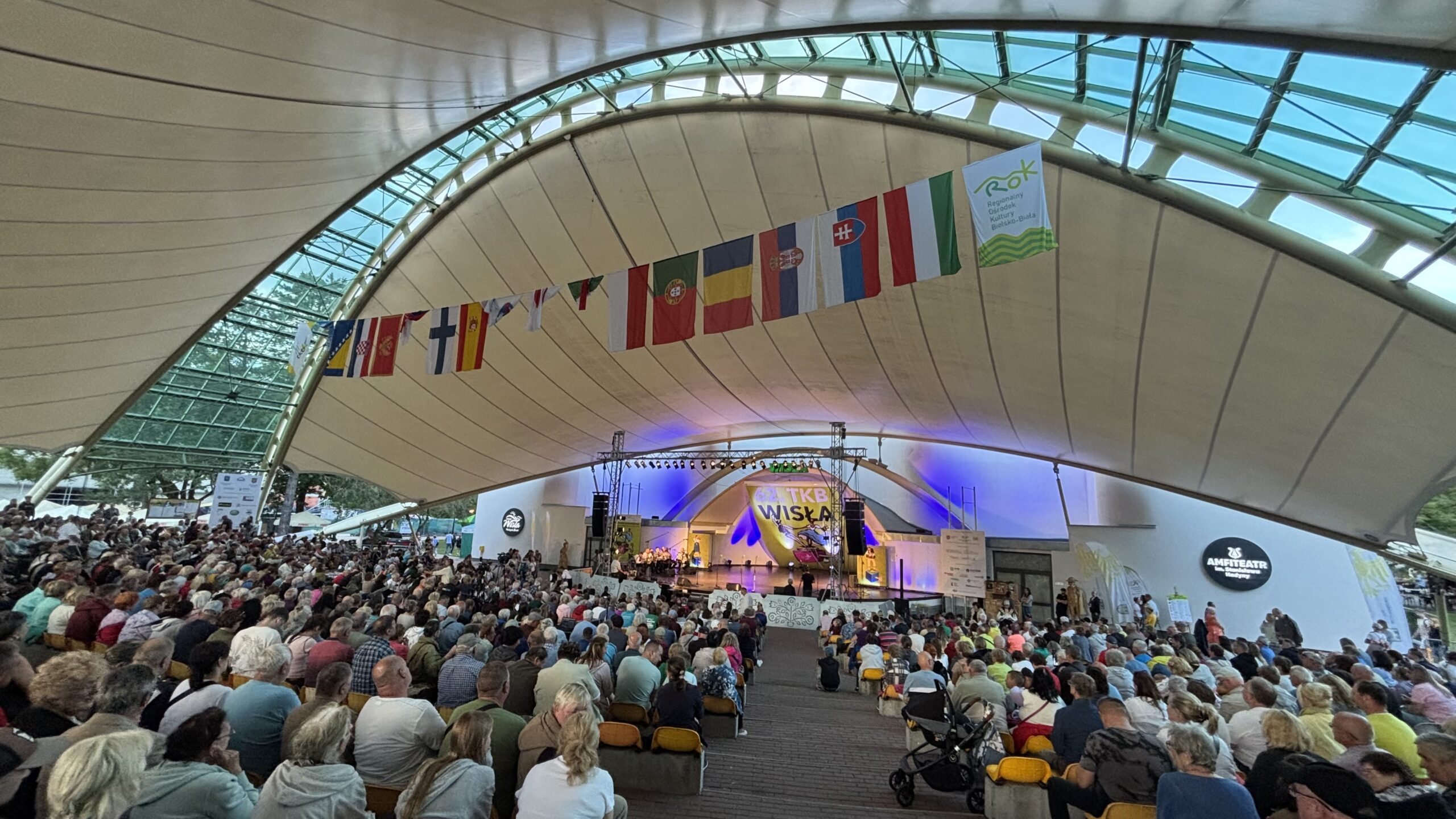
Przepiękne miejsce wśród gór, w otoczeniu wspaniałej przyrody, w Parku Kopczyńskiego. To miejsce jest absolutnie niesamowite. Tuż obok amfiteatru płynie rzeka Wisła. Słychać odgłosy przyrody, śpiew ptaków. Więc myślę, że Leo Rojas i jego zespół z Włoch będą zachwyceni.
Tak, oczywiście, że tak.
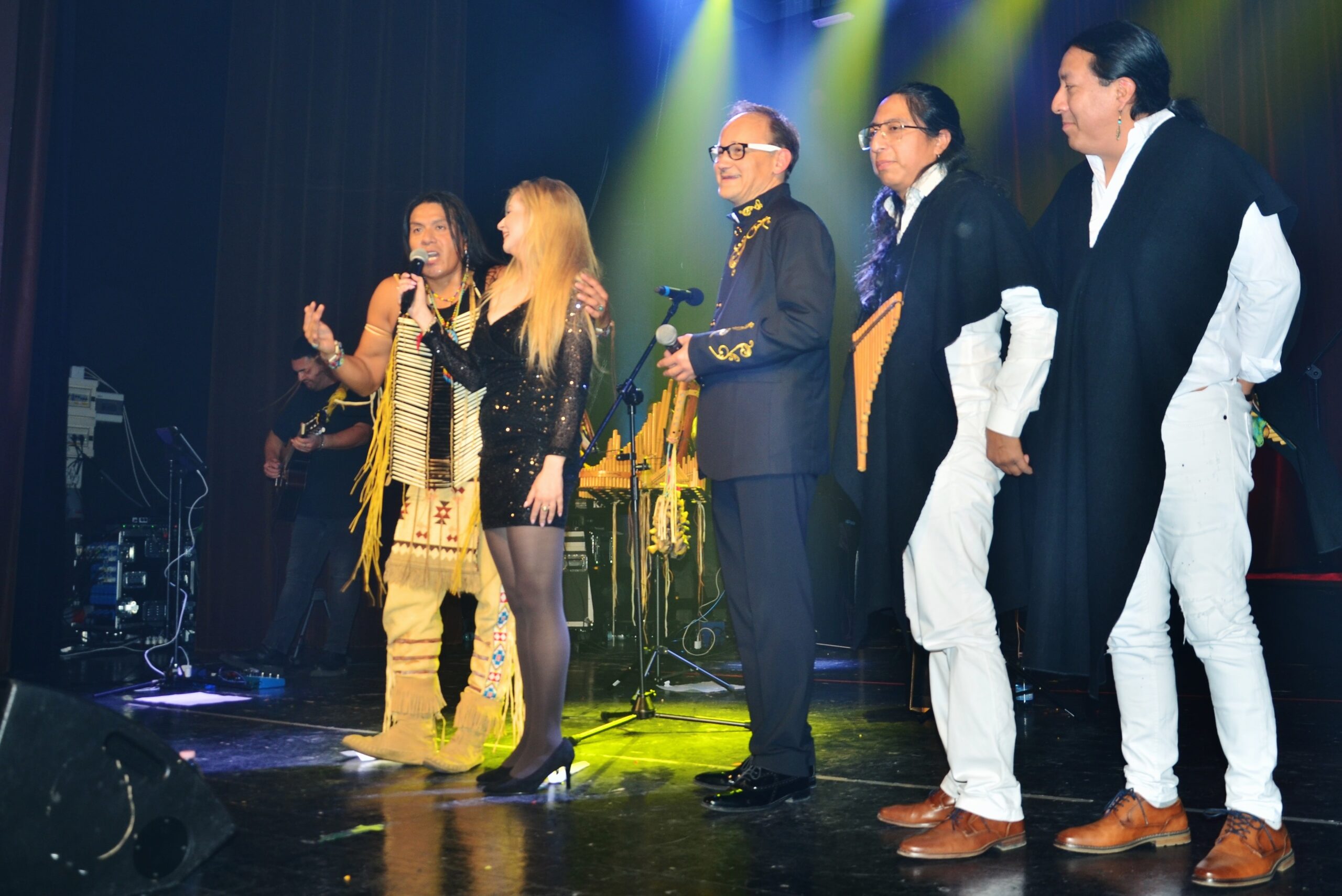
od lewej: Leo Rojas, Ewelina Mytych, Krzysztof Korwin-Piotrowski, Eliseo Jerez, Anibal Jerez, koncert w Kinie Na Starówce w Żorach 12.10.2025, fot. Józef Ćwiek
Ale wróćmy do rozmowy o zespole Ruana Salasaka. Drugi człon nazwy jest od regionu Salasaka, gdzie się urodzili. A skąd pochodzi słowo Ruana?
Bo to jest nazwa z języka kichua czyli ich języka rdzennego, plemiennego. I ta nazwa oznacza dosłownie ponczo z Salasaki. Po hiszpańsku byśmy powiedzieli Poncito de Salasaka, a po kuchuańsku – Ruana Salasaka. Tak to sobie nasi muzycy wymyślili. Ale też muszę panu powiedzieć ważną rzecz, ponieważ my ich zazwyczaj widzimy w ponczach. Czarne są ważnym elementem ich kultury, ponieważ oznaczają żałobę po ich królu, władcy Inków, który został w 1533 roku zamordowany przez konkwistadorów. I właśnie te poncza w kolorze czarnym są na znak żałoby. Poncza w kolorze czarnym w ich kulturze w ogóle symbolizują żałobę, ale też mogą je zakładać na jakieś poważne uroczystości. Natomiast poncza w kolorze białym to jest znak radości, fiesty, imprezy. Do ślubu też zakładają białe poncza, które symbolizują coś dobrego. No, czyli tak jak u nas. Przecież w europejskiej kulturze to samo.
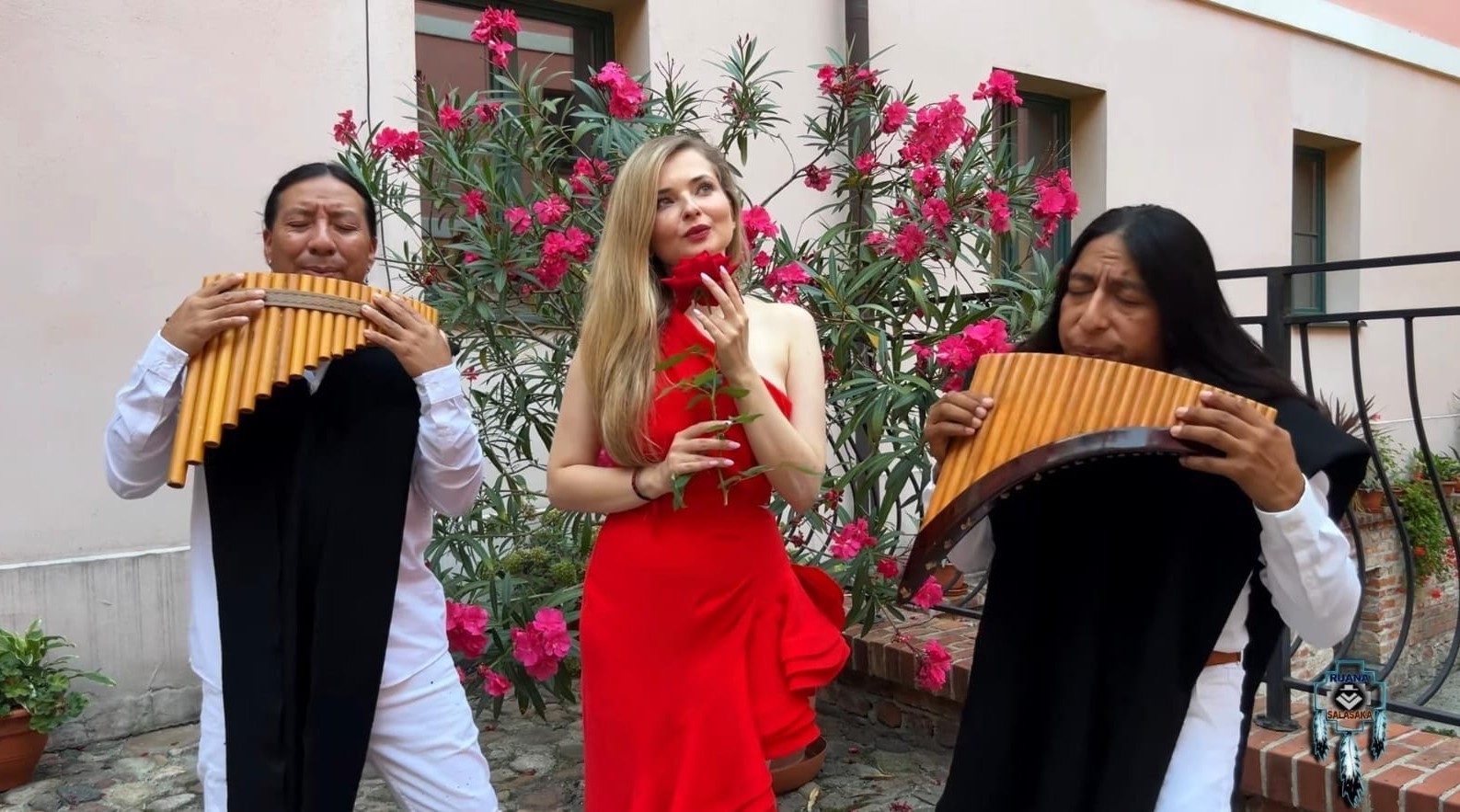
od lewej: Anibal Jerez Masaquiza, Ewelina Mytych, Eliseo Jerez Masaquiza
Kolor czarny kojarzy się z żałobą, ale przecież również z elegancją, prawda? Na ważne uroczystości ludzie ubierają się na czarno. Kobiety zakładają czarne suknie, mężczyźni czarne garnitury albo smokingi i spodnie.
To jest akurat zbieżne z naszą kulturą.
A jak doszło do tego, że Eliseo i Anibal zaczęli współpracować, że założyli ten zespół i postanowili występować razem w Europie?
Pewnego wieczoru, jak rozmawiałam z naszymi muzykami, zapytałam ich, kiedy przyjadą do Polski z koncertem, a oni odpowiedzieli: Jeżeli nas ktoś zaprosi, to bardzo chętnie przylecimy. Ja wtedy odpowiedziałam: Na przykład ja was zaproszę. No i właśnie od tego się zaczęło. Zaplanowaliśmy pierwszy koncert na sierpień 2024 na Dolnym Śląsku, a potem to już wszystko potoczyło się tak, jak widzi. Były kolejne koncerty drugi, trzeci, czwarty. No i tak to trwa do dzisiaj.
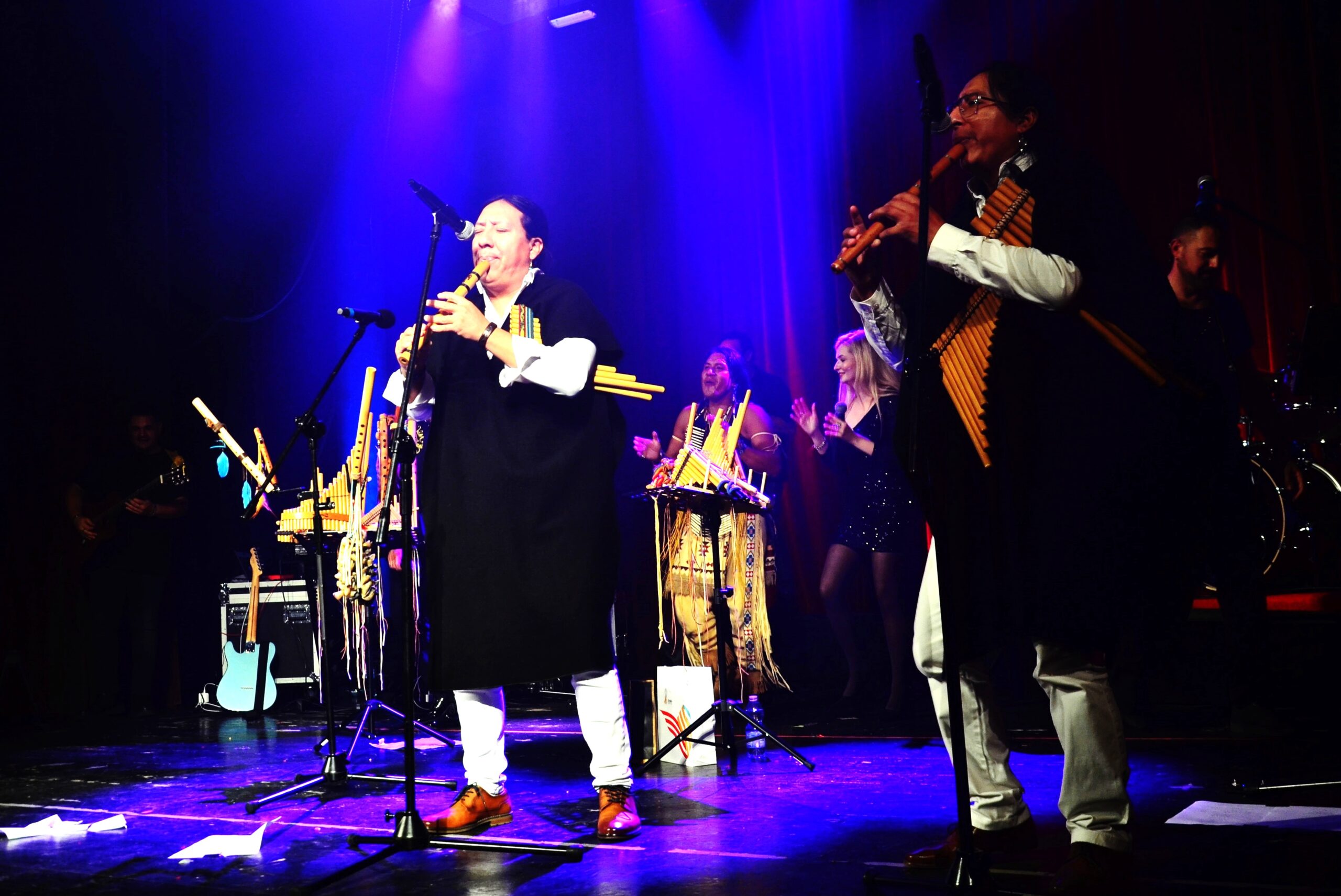
Ale jak oni się w ogóle spotkali?
Po latach spotkali we Francji. Kojarzyli się z widzenia. Okazało się, że mieszkają blisko siebie. No i Eliseo zaproponował Anibalowi współpracę, która trwa cztery lata.
Natomiast chciałbym jeszcze, żeby pani powiedziała o repertuarze, ponieważ on jest bardzo urozmaicony.
Tak, z jednej strony są to tradycyjne andyjskie utwory, bo muzycy chcą podtrzymać tradycję swojego kraju, czyli nie zapominają o utworach z gatunku San Juanito – takich melodiach skocznych, do tańca, nawiązujących do folkloru Ekwadoru. Ale też ich ukłon w stronę publiczności europejskiej jest taki, że zaaranżowali wiele znanych utworów europejskich na fletniach Pana. To są utwory taneczne, melodyjne, ale oni też mają, mają w repertuarze pieśni sakralne, ponieważ organizowałam im również koncerty w kościołach. Można usłyszeć w ich wykonaniu takie utwory jak: Ave Maria, Wśród tylu dróg, Alleluja, Wierzę w Ciebie, Panie. Zespół Ruana Salasaka uświetnia też rozmaite wydarzenia, jubileusze czy imprezy firmowe. Utwory wykonywane przez nich porywają do tańca całe pokolenia, od juniora do seniora.
Słucham sobie często ich płyty Rok Słońca – Año del Sol, która zawiera dwanaście utworów.
Ten album ukazał się w maju 2024 roku. Tutaj są zarówno przeboje europejskie, jak i utwory tradycyjne z gatunku San Juanito, na przykład utwór Imbaburapak, który oznacza Vamos a Imbabura, czyli Chodźmy do Imbabury, tego sławnego wulkanu w Ekwadorze.
No i powiedzmy o tym, że właśnie w październiku 2025 roku, kiedy Leo Rojas z zespołem włoskim Band alla Italiana wystąpił w Kinie Na Starówce w Żorach na nasze zaproszenie (Fundacji Arte Viva, Krzysztofa Korwina-Piotrowskiego i Eweliny Mytych), Eliseo i Anibal Jerez dedykowali Leo ten utwór jako jego goście specjalni. To było wspaniałe. Ludzie byli zachwyceni. Cała publiczność i Leo też. To zostało nagrane i ukazało się w reportażu TVP.
Imbaburapak jest jednym z ich flagowych utworów z tradycyjnego gatunku San Juanito – to bardzo stara melodia. Jest więcej jeszcze takich utworów, na przykład Warmisita, Amigos, Churay, churay. Mamy też bardziej spokojne jak Intiwatay, ale są również covery jak Watch Over My Dreams Mario Spindlera.
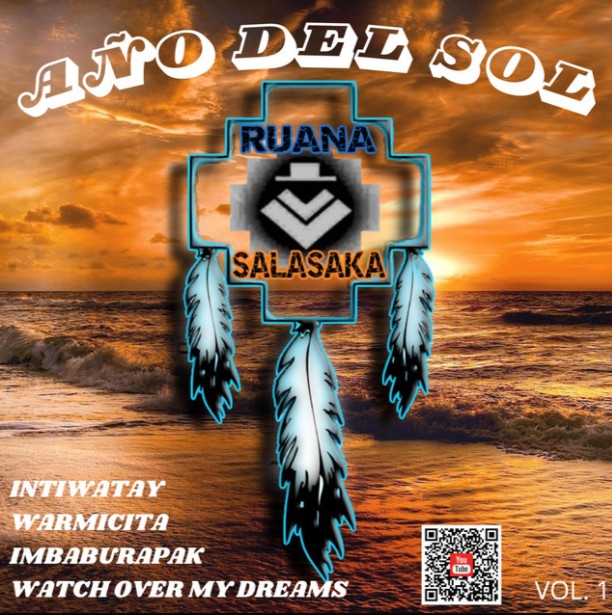
Jeszcze na przykład jest na płycie Año del Sol taki utwór, który mnie niesamowicie wzruszył: My Sweet Indian Child – Moje urocze dziecko indiańskie.
To jest utwór, który powstał w hołdzie zamordowanym dzieciom w Amazonii. Bardzo, bardzo smutna historia. Powiem panu, że gdybyśmy się zagłębili w liryce tego utworu to tam jest siedem kropel krwi porównanych do siedmiu łez mordowanych dzieci.
Ale na płycie też jest Barka, która kojarzy się nam, Polakom, przede wszystkim z papieżem Janem Pawłem II. A przecież nie jest to hiszpańska pieśń religijna, do której zostały dopisane polskie słowa. Generalnie rzeczywiście Ruana Salasaka ma bardzo urozmaicony repertuar, co zaprezentowali także w Środzie Śląskiej. Koncert trwał dwie i pół godziny i widać, że publiczność nie miała dość, ponieważ prosiła o bis. Było standing ovation i mamy nadzieję, że tak samo będzie w Żorach 24 stycznia 2026 roku, prawda? Bilety można kupić na stronie KupBilecik, a także można je rezerwować w kawiarence Kina Na Starówce lub poprzez mail arteviva.korwin@gmail.com. Zapraszamy wszystkich na koncert Ruany Salasaki „Karnawał w Rio”, ale też wystąpi dodatkowo nowy zespół, wspaniały Felix Lala Quartet, który zaprezentuje latynoamerykańskie. No i jeszcze Arte Viva Showgirls, które przeniosą nas w rytmy samby brazylijskiej i atmosferę karnawału w Rio de Janeiro, więc myślę, że to będzie bardzo ciekawe połączenie.
Cieszę się, że mogę współorganizować z Panem ten koncert i będziemy go prowadzić razem. Myślę, że publiczność będzie zadowolona.
W sali widowiskowej Domu Kultury w Środzie Śląskiej koncert trwał 2 i pół godziny i jeszcze publiczność wołała „bis”, bijąc brawa na stojąco. Więc do zobaczenia w budynku Sceny Na Starówce w Żorach w sobotę 24 stycznia 2026 roku o 18.00 na koncercie „Karnawał w Rio – Ruana Salasaka”. Dziękuję za miłą rozmowę.
Ja również bardzo dziękuję, Panie Krzysztofie i do zobaczenia.
SPANISH
Ruana Salasaka: Un viaje musical de Ecuador a Europa
Entrevista: Krzysztof Korwin-Piotrowski con Ewelina Mytych
Fotografías: Józef Ćwiek y archivo de la Fundación Arte Viva
El grupo ecuatoriano Ruana Salasaka lleva apenas 4 años en actividad, pero ya cuenta con 540 mil seguidores en TikTok, casi 45 mil en Facebook y 111 mil suscriptores en YouTube. También se pueden escuchar sus canciones en Spotify. Los músicos son Eliseo Jerez Masaquiza y Anibal Jerez Masaquiza. A pesar de tener apellidos idénticos, no son hermanos, sino amigos de la misma localidad, Salasaka, en Ecuador. Los artistas se presentarán el 24 de enero de 2026 a las 18:00 en el Cine Na Starówce en Żory durante el concierto „Carnaval en Río”. También compartirán el escenario con: Felix Lala Quartet y Arte Viva ShowGirls. Los organizadores del evento son la Fundación Arte Viva, el director artístico Krzysztof Korwin-Piotrowski y Ewelina Mytych. Colaboración: Centro Cultural Municipal en Żory, Escena Na Starówce.
Krzysztof Korwin-Piotrowski: ¿Cuándo conoció al grupo Ruana Salasaka?
Ewelina Mytych: Fue a principios del año 2023. Ya estaba estudiando español desde hacía aproximadamente medio año. Al mismo tiempo, comencé a adentrarme en el mundo indígena. Me inscribí en diversos foros musicales, empecé a seguir a artistas que representaban este tipo de música. En un momento noté que en mi cuenta de TikTok, que ya estaba convirtiendo en hispanohablante, el grupo musical ecuatoriano Ruana Salasaka me había seguido. Justo en ese momento, los artistas empezaron a seguirme también en Facebook. Ellos fueron los primeros en querer añadirme como amiga. Yo también los seguí. Comencé por curiosidad a revisar quiénes eran esos músicos y qué tipo de música representaban. Y así conocí a esos chicos.
Empecé a hablar con ellos. Eliseo y Anibal me contaron su historia, que son de la provincia de Tungurahua en Ecuador, que está cerca del famoso volcán Tungurahua en los Andes, cerca de Salasaka, que es la localidad de donde ambos provienen. Eliseo nació el primero de junio, justo en el Día del Niño de 1982. En cambio, Anibal es dos años mayor y nació el ocho de octubre de 1980.
Los chicos crecieron en Salasaca. Antes se conocían de vista. No estaban juntos en la misma clase, pero estudiaron en las mismas escuelas. Simplemente, como usted sabe, era un conocimiento solo de saludo. Los chicos aprendieron música de oído, practicaban en sus primeros instrumentos en sus casas. Pero, lamentablemente, la situación económica en Salasaca en los años ochenta y noventa era tal que había una gran pobreza y los padres no podían permitirse que estudiaran música en universidades o escuelas de música.
Sin embargo, tenían tal determinación y disciplina que simplemente se formaron muy intensamente, practicaban por su cuenta. Con cada dinero ganado se compraban más instrumentos, cada vez mejores. Y, como usted sabe, llegó un momento, a finales de los años noventa, en que ambos emigraron a Europa, primero Anibal y unos años después Eliseo. Trabajaron en diferentes países. Pasaron por Alemania, Bélgica, hasta que finalmente llegaron a Francia.
Y, por favor, dígame, ¿cómo es lo de los apellidos de los indígenas americanos? Porque ambos se llaman igual, y no son familiares.
Yo también al principio pensé que eran hermanos y, de hecho, creo que la mayoría de las personas que tienen la oportunidad de conocerlos, piensan que son hermanos, aunque en realidad no están relacionados. Es simplemente una tradición en la cultura latinoamericana, en Ecuador, Perú, Bolivia y otros países, en los que se obtienen apellidos de los padres. Al casarse, las mujeres no cambian sus apellidos y los hijos tienen un apellido combinado del padre y la madre. Primero es el apellido del padre y luego el de la madre. Pero en esta región, la gran mayoría de las personas tienen el mismo apellido o en orden inverso, es decir: Jerez Masaquiza o Masaquiza Jerez, o Jerez Jerez, o Masaquiza Masaquiza. Y es precisamente por eso que, como la mayoría de las personas se llaman así, ellos también tienen los mismos apellidos, es decir, Jerez Masaquiza.
Y en Francia, ¿tienen familias y viven allí permanentemente?
Sí, en Francia han formado sus propias familias. Sus esposas adoptaron sus apellidos dobles y los hijos también. Por lo tanto, esas familias ecuatoriano-francesas tienen el mismo apellido. Viven en un hermoso lugar llamado Ernée en la región de Mayenne. Además de la música, se dedican a la producción y venta de artesanía indígena. Porque, en realidad, creo que todos los indígenas que tienen habilidades artísticas también tienen talento para las artes plásticas, para la producción de joyería o pintura. Anibal y Eliseo, en particular, no pintan cuadros, pero saben elaborar hermosa joyería artística: aretes, pulseras, colgantes.
¿Y también hacen atrapasueños?
Sí, los atrapasueños, es decir, decoraciones para el hogar, vienen en diferentes tamaños, desde los más pequeños hasta los más grandes que podemos colgar en las paredes. Y esos atrapasueños tienen un significado simbólico. Creo que influyen en nuestros sueños, porque simplemente nos tranquilizan.
Sí, puedo decir desde mi propia perspectiva que desde que recibí de ellos, a través de usted, un atrapasueños, tengo tres en una habitación y desde ese momento he empezado a recordar mis sueños, que anteriormente desaparecían en el abismo del olvido. En cuanto me despertaba, abría los ojos y ya no sabía qué había soñado. Ahora esos sueños son muy realistas para mí, pero al mismo tiempo son buenos. Por ejemplo, me traen a personas con las que tuve buenas relaciones en el pasado, luego esas relaciones se tornaron malas y mejoran en los sueños. Y eso es realmente increíble. Desde el momento en que colgué los atrapasueños en la ventana y en la pared, de hecho no he tenido pesadillas. Antes solía tener esos sueños a menudo, a veces muy dramáticos y aterradores, con abismos y caídas. Ahora tengo sueños en un ambiente hogareño, con amigos, con familia. Así que desde mi perspectiva, esto realmente funciona.
Entonces, debo decirle sobre otra situación. Tengo aretes y un colgante con atrapasueños, así que imagínese que duermo con ellos. Y, ¿sabe qué? He tenido sueños que tienen un buen significado. Tiene toda la razón. Alguien puede decir que son solo creencias, pero de verdad pienso que hay algo de verdad en esto.
Lo más importante es la actitud de la persona, ¿verdad? Tenemos conciencia y subconsciente. Que nuestro subconsciente se enfoque en algo positivo es muy agradable, porque no solo se duerme mejor, sino que uno se despierta con una mejor y más optimista disposición hacia la vida. Y otro asunto es la música andina, que calma los nervios. Gracias a usted, conocí recientemente a la señora Małgorzata Neumann de Malbork, que tiene una colección de más de cien discos de música andina y asiste a esos conciertos. Resultó que estuvo con todo un grupo también en el concierto de Leo Rojas en Żory, lo cual no sabía. Y ahora, por supuesto, ha venido a Środa Śląska con su familia y amigos. Ya compró boletos para el concierto de Ruana Salasaka en Żory el 24 de enero y preguntaba por boletos para el próximo espectáculo de Leo. Eso será en el marco del Festival de Ópera y Musical de Wisła el 17 de julio de 2026 en el Anfiteatro de Wisła. Un lugar hermoso entre montañas, rodeado de una maravillosa naturaleza, en el Parque Kopczyńskiego. Ese lugar es absolutamente increíble. Justo al lado del anfiteatro fluye el río Vístula. Se oyen los sonidos de la naturaleza, el canto de los pájaros. Así que pienso que Leo Rojas y su banda de Italia quedarán encantados.
Sí, por supuesto que sí.
Pero volvamos a la conversación sobre el grupo Ruana Salasaka. El segundo componente del nombre proviene de la región de Salasaka, donde nacieron. ¿Y de dónde proviene la palabra Ruana?
Porque es un nombre del idioma kichua, su lengua indígena, tribal. Y ese nombre significa literalmente poncho de Salasaka. En español diríamos Poncito de Salasaka, y en kichua – Ruana Salasaka. Así lo idearon nuestros músicos. Pero también debo decirle algo importante, ya que normalmente los vemos en ponchos. Los negros son un elemento importante de su cultura, porque simbolizan el luto por su rey, el gobernante inca, que fue asesinado por los conquistadores en 1533. Y esos ponchos de color negro son en señal de luto. Los ponchos negros en su cultura simbolizan el luto, pero también pueden llevarlos en ceremonias importantes. En cambio, los ponchos de color blanco son una señal de alegría, fiesta, celebración. También usan ponchos blancos para las bodas, que simbolizan algo bueno. Así que es como en nosotros. En la cultura europea es lo mismo.
El color negro se asocia con el luto, pero también con la elegancia, ¿verdad? En ceremonias importantes, la gente se viste de negro. Las mujeres llevan vestidos negros, los hombres trajes o esmóquines y pantalones negros.
Esto concuerda con nuestra cultura.
Y, ¿cómo ocurrió que Eliseo y Anibal comenzaron a colaborar, que fundaron este grupo y decidieron actuar juntos en Europa?
Una noche, mientras hablaba con nuestros músicos, les pregunté cuándo vendrían a Polonia con un concierto, y ellos respondieron: Si alguien nos invita, estaremos encantados de venir. Yo entonces respondí: Por ejemplo, yo los invito. Así empezó todo. Planeamos el primer concierto para agosto de 2024 en Baja Silesia, y luego todo fluyó como lo ve. Hubo conciertos sucesivos, el segundo, el tercero, el cuarto. Y así ha continuado hasta hoy.
Pero, ¿cómo se encontraron en primer lugar?
Después de años se encontraron en Francia. Se conocían de vista. Resultó que vivían cerca uno del otro. Entonces Eliseo propuso a Anibal una colaboración que ha durado cuatro años.
Sin embargo, me gustaría que usted hablara sobre el repertorio, ya que es muy variado.
Sí, por un lado son temas andinos tradicionales, porque los músicos quieren mantener la tradición de su país, es decir, no se olvidan de las canciones del género San Juanito, melodías alegres y de baile que hacen referencia al folclore ecuatoriano. Pero también han hecho un guiño al público europeo al arreglar muchas canciones conocidas europeas en flautas de Pan. Son canciones bailables, melódicas, pero también tienen en su repertorio canciones sacras, ya que también organicé conciertos para ellos en iglesias. En su interpretación se pueden escuchar temas como: Ave María, Entre tantos caminos, Aleluya, Creo en Ti, Señor. El grupo Ruana Salasaka también enriquece diversos eventos, jubileos o fiestas corporativas. Las canciones que interpretan hacen que personas de todas las generaciones, desde jóvenes hasta mayores, se pongan a bailar.
A menudo escucho su álbum Año del Sol, que contiene doce canciones.
Este álbum se lanzó en mayo de 2024. Aquí hay tanto éxitos europeos como canciones tradicionales del género San Juanito, por ejemplo, la canción Imbaburapak, que significa Vamos a Imbabura, es decir, Vamos a Imbabura, ese famoso volcán en Ecuador.
Y hablemos de que en octubre de 2025, cuando Leo Rojas con la banda italiana Band alla Italiana se presentó en el Cine Na Starówce en Żory a nuestra invitación (Fundación Arte Viva, Krzysztof Korwin-Piotrowski y Ewelina Mytych), Eliseo y Anibal Jerez le dedicaron a Leo esta canción como sus invitados especiales. Fue maravilloso. La gente estaba encantada. Todo el público y Leo también. Eso fue grabado y salió en un reportaje de TVP.
Imbaburapak es una de sus canciones emblemáticas del género tradicional San Juanito – es una melodía muy antigua. Hay más de tales canciones, como Warmisita, Amigos, Churay, churay. También tenemos cosas más lentas como Intiwatay, pero también hay versiones como Watch Over My Dreams de Mario Spindler.
Otro ejemplo es que en el disco Año del Sol hay una canción que me conmovió mucho: My Sweet Indian Child – Mi dulce niño indígena.
Es una canción que se creó en homenaje a los niños asesinados en el Amazonas. Una historia muy, muy triste. Le diré que si profundizamos en la letra de esta canción, hay siete gotas de sangre comparadas con siete lágrimas de los niños que fueron asesinados.
Pero en el álbum también está Bark, que para nosotros los polacos se asocia principalmente con el Papa Juan Pablo II. Y, por supuesto, no es una canción religiosa española a la que se le han agregado letras polacas. En general, Ruana Salasaka tiene un repertorio muy variado, que también presentaron en Środa Śląska. El concierto duró dos horas y media y se notó que el público no se cansaba, ya que pedían bises. Hubo una ovación de pie y esperamos que sea igual en Żory el 24 de enero de 2026, ¿verdad? Los boletos se pueden comprar en el sitio KupBilecik, y también se pueden reservar en la cafetería del Cine Na Starówce o por correo a arteviva.korwin@gmail.com. Invitamos a todos al concierto de Ruana Salasaka „Carnaval en Río”, pero también actuará un nuevo grupo, el maravilloso Felix Lala Quartet, que presentará música latinoamericana. Y también las Arte Viva Showgirls, que nos llevarán a los ritmos de la samba brasileña y la atmósfera del carnaval de Río de Janeiro, así que creo que será una combinación muy interesante.
Estoy feliz de coorganizar este concierto con usted y lo llevaremos a cabo juntos. Creo que el público estará satisfecho.
En la sala de espectáculos del Centro Cultural en Środa Śląska, el concierto duró 2 horas y media y el público pidió bises, aplaudiendo de pie. Así que nos vemos en el edificio de la Escena Na Starówce en Żory el sábado 24 de enero de 2026 a las 18:00 en el concierto „Carnaval en Río – Ruana Salasaka”. Gracias por la agradable conversación.
Yo también le agradezco mucho, señor Krzysztof, y hasta pronto.
ENGLISH
Ruana Salasaka: A Musical Journey from Ecuador to Europe
Interview: Krzysztof Korwin-Piotrowski with Ewelina Mytych
Photos: Józef Ćwiek and the Arte Viva Foundation archive
The Ecuadorian band Ruana Salasaka has been active for only four years, yet it already boasts 540,000 followers on TikTok, nearly 45,000 on Facebook, and 111,000 subscribers on YouTube. Their music is also available on Spotify. The musicians are Eliseo Jerez Masaquiza and Anibal Jerez Masaquiza. Despite sharing the same last name, they are not brothers, but friends from the same town of Salasaka in Ecuador. The artists will perform on January 24, 2026, at 6:00 PM at the Kino Na Starówce in Żory during the concert „Carnival in Rio.” They will be joined on stage by the Felix Lala Quartet and Arte Viva ShowGirls. The event is organized by the Arte Viva Foundation, Artistic Director Krzysztof Korwin-Piotrowski, and Ewelina Mytych, in cooperation with the Municipal Cultural Center in Żory and the Scena Na Starówce.
Krzysztof Korwin-Piotrowski: When did you meet the band Ruana Salasaka?
Ewelina Mytych: It was at the beginning of 2023. I had already been learning Spanish for about six months. At the same time, I started exploring the world of Native Americans. I signed up for various music forums, began subscribing to artists representing this type of music. At some point, I noticed that the band from Ecuador, Ruana Salasaka, followed me on my Spanish-language TikTok account. At that moment, they also started following me on Facebook. They were the first to want to add me as a friend. I subscribed to them too. Out of curiosity, I started exploring what kind of musicians they were and what type of music they represented. That’s how I got to know these guys.
I started talking with them. Eliseo and Anibal shared their story with me, saying that they come from the province of Tungurahua in Ecuador, which is near the famous Tungurahua volcano in the Andes, not far from Salasaka, the town they both come from. Eliseo was born on June 1, exactly on Children’s Day in 1982. Anibal is two years older and was born on October 8, 1980. The boys grew up in Salasaka. They were familiar with each other by sight. They didn’t attend the same class but went to the same schools. It was just an acquaintance, you know, “hello.” They learned music by ear, practicing on their first instruments at home. Unfortunately, the economic situation in Salasaka in the 1980s and 1990s was such that there was significant poverty, and their parents couldn’t afford to have them study music at universities or music schools.
However, they had the determination and discipline to teach themselves intensively. They bought new instruments with every earned penny. By the end of the 1990s, both emigrated to Europe, first Anibal, and a few years later Eliseo. They worked in various countries, passing through Germany, Belgium, and finally settling in France.
Could you tell me how it is with the last names of Native Americans? Both of them have the same last name but are not family.
I also initially thought they were brothers, and I think most people who get to know them also think at first that they’re brothers, but they are not related at all. There is a tradition in Latin American culture—in Ecuador, Peru, Bolivia, and other countries—where surnames are taken from both the father and mother. Women do not change their last names when they marry, and children have a hyphenated surname derived from both parents. The father’s surname comes first, followed by the mother’s. However, in this region, the vast majority of people have the same surnames or in reverse order, that is: Jerez Masaquiza or Masaquiza Jerez, or Jerez Jerez, or Masaquiza Masaquiza. Precisely because most people have this surname, they also share the same surnames, Jerez Masaquiza.
And they have families in France, living there permanently?
Yes, they have started families in France. Their wives adopted their double surnames, and the children have them as well. So these Ecuadorian-French families share the same names. They live in a lovely town called Ernée in a region called Mayenne. Besides music, they are involved in producing and selling Indigenous handicrafts. Because, you know, I think all artists among Native Americans also have a knack for artistic crafts, making jewelry, or painting. Anibal and Eliseo, however, do not paint but can create beautiful artistic jewelry: earrings, bracelets, pendants.
Do they also make dreamcatchers?
Yes, they make dreamcatchers, which are home decorations of various types, from the smallest to the largest, which can be hung on walls. These dreamcatchers have symbolic significance. I believe they influence our dreams because they simply calm us down.
Yes, I can say from my perspective that since I received dreamcatchers from them through you, I have three in one bedroom, and since then I’ve started remembering my dreams, which before seemed to disappear into the void. As soon as I woke up and opened my eyes, I wouldn’t know what I had dreamed. Now, these dreams feel very real to me, but at the same time, they are pleasant. For example, they bring back people with whom I once had good relationships, which later became worse, but those relationships improve in dreams. And that’s truly amazing. Since I hung these dreamcatchers on my window and on the wall, I indeed haven’t had any nightmares. I used to have such dreams often, sometimes very dramatic and terrifying, involving abysses and falling. Now I have dreams in a homey atmosphere, with friends and family. So from my perspective, it works.
I must tell you about another situation. I have earrings and a pendant with dreamcatchers, so imagine I fall asleep with them. And you know what? I’ve had dreams that held good meanings. You’re absolutely right. Some might say these are just beliefs, but I still think there’s truth in it.
The most important thing is a person’s mindset, right? We have consciousness and the subconscious. The fact that our subconscious seems to focus on something positive is very nice because not only do we sleep better, but we also wake up with a better, more optimistic outlook on life. Another matter is Andean music, which soothes nerves. Thanks to you, I recently met Małgorzata Neumann from Malbork, who has a collection of over a hundred CDs of Andean music and attends such concerts. It turned out that she was with a whole group at the concert of Leo Rojas in Żory, which I wasn’t aware of. Now she naturally came to Środa Śląska with her family and friends. She already bought tickets for the Ruana Salasaka concert in Żory on January 24 and asked about tickets for Leo’s next performance. This will be part of the Vistula Opera and Musical Festival on July 17, 2026, at the Amphitheater in Wisła. It’s a beautiful place among the mountains, surrounded by wonderful nature, in the Kopczyńskiego Park. This spot is absolutely incredible. Right next to the amphitheater flows the Vistula River. You can hear nature sounds, birds singing. So I think Leo Rojas and his band from Italy will be thrilled.
Yes, of course.
But let’s return to the conversation about the band Ruana Salasaka. The second part of the name is derived from the region of Salasaka, where they were born. What about the word „Ruana”?
It is a name from the Kichwa language, which is their indigenous tribal language. This name literally means „poncho from Salasaka.” In Spanish, we would say „Poncito de Salasaka,” and in Kichwa – „Ruana Salasaka.” That’s how our musicians came up with it. But I must also tell you an important thing because we usually see them in ponchos. Black ones are an important element of their culture because they symbolize mourning for their king, the Inca ruler, who was murdered by conquistadors in 1533. And those black ponchos are a sign of mourning. In their culture, black ponchos symbolize grief, but they may also be worn at serious ceremonies. White ponchos, on the other hand, signify joy, festivity, and celebration. They also wear white ponchos for weddings, which symbolize something good. Well, it’s the same as with us. In European culture, it’s the same.
The color black is associated with mourning, but it also signifies elegance, right? At important ceremonies, people dress in black. Women wear black dresses, men wear black suits or tuxedos and trousers.
That aligns with our culture.
So how did Eliseo and Anibal come to collaborate, leading them to form this band and decide to perform together in Europe?
One evening, while talking with our musicians, I asked them when they would come to Poland for a concert, and they replied, „If someone invites us, we would be very happy to come.” I then responded, „For example, I will invite you.” And that’s how it all began. We planned their first concert for August 2024 in Lower Silesia, and then everything unfolded as you see it now. There were subsequent concerts: the second, third, fourth. And it has continued until today.
But how did they actually meet?
They met in France after many years. They recognized each other by sight. It turned out they lived close to each other. Eliseo proposed collaboration to Anibal, which has lasted for four years.
I would also like you to speak about the repertoire because it is quite varied.
Yes, on one hand, they perform traditional Andean pieces because the musicians want to maintain the tradition of their country, so they do not forget the songs of the San Juanito genre—those lively melodies for dancing that are connected to Ecuadorian folklore. But, at the same time, their nod to the European audience is that they have rearranged many well-known European songs for pan flutes. These are danceable, melodic pieces, but they also include sacred songs, as I organized concerts for them in churches. You can hear songs like „Ave Maria,” „Among So Many Roads,” „Alleluia,” „I Believe in You, Lord,” in their performances. The band Ruana Salasaka also brightens various events, anniversaries, or corporate gatherings. Their songs mesmerize audiences of all ages, from junior to senior.
I frequently listen to their album „Rok Słońca – Año del Sol,” which consists of twelve tracks.
This album was released in May 2024. It features both European hits and traditional songs from the San Juanito genre, such as „Imbaburapak,” which means „Let’s Go to Imbabura,” named after that famous volcano in Ecuador.
Let’s mention that back in October 2025, when Leo Rojas performed in the Kino Na Starówce in Żory at our invitation (the Arte Viva Foundation, Krzysztof Korwin-Piotrowski, and Ewelina Mytych), Eliseo and Anibal Jerez dedicated this song to Leo as special guests. It was magnificent. The audience was thrilled. Everyone, including Leo, was captivated. It was recorded and featured in a TVP report.
„Imbaburapak” is one of their flagship songs from the traditional San Juanito genre—it’s a very old melody. There are more songs like that, for example, „Warmisita,” „Amigos,” „Churay, churay.” There are also more tranquil tracks like „Intiwatay,” but they also include covers like „Watch Over My Dreams” by Mario Spindler.
There’s also a track on the album „Año del Sol” that deeply moved me: „My Sweet Indian Child.”
This song was created in tribute to the murdered children in the Amazon. It’s a very, very sad story. I’ll tell you that if we delve into the lyrics of this song, it compares seven drops of blood to the seven tears of murdered children.
But the album also features „Barka,” which is primarily associated by us Poles with Pope John Paul II. Yet it’s not a Spanish religious song to which Polish words were added. Generally, Ruana Salasaka indeed has a very diverse repertoire, as they showcased also in Środa Śląska. The concert lasted two and a half hours, and it was clear that the audience wanted more, as they were calling for an encore, giving a standing ovation. We hope the same will happen in Żory on January 24, 2026, right? Tickets can be purchased on the KupBilecik website, and they can also be reserved at the cafe of the Kino Na Starówce or via email at arteviva.korwin@gmail.com. We invite everyone to the Ruana Salasaka concert „Carnival in Rio,” and a wonderful new band, the Felix Lala Quartet, which will present Latin American music. And there will be the Arte Viva ShowGirls, who will bring us into the rhythms of Brazilian samba and the atmosphere of the Rio de Janeiro carnival, so I think it will be a very interesting combination.
I’m glad I can co-organize this concert with you, and we will host it together. I believe the audience will be satisfied.
In the cultural hall of the Cultural Center in Środa Śląska, the concert lasted two and a half hours, and the audience still called for „encore,” applauding while standing. So, see you in the Scena Na Starówce building in Żory on Saturday, January 24, 2026, at 6:00 PM for the concert „Carnival in Rio – Ruana Salasaka.” Thank you for the pleasant conversation.
Thank you very much, Mr. Krzysztof, and see you soon.